Originally published: November 13, 2014 | Last updated: July 14, 2025
TL;DR: A Living Will is a legal document that specifies which medical treatments you do and do not want if you become critically ill and cannot communicate. It is not the same as a Do Not Resuscitate (DNR) order or a Last Will and Testament. A complete estate plan includes four documents: a Last Will and Testament, a Living Will, a Healthcare Power of Attorney, and a Financial Power of Attorney. USLegalWills.com uses the term “Advance Directives” to cover both the Living Will and Healthcare Power of Attorney.
What Is a Living Will?
A Living Will functions as a legal document which proves your medical treatment choices for survival maintenance and organ donation decisions and pain management decisions.
A Living Will allows you to state your personal choices regarding heroic measures during your final days and your preferences for feeding tubes and mechanical ventilation and dialysis treatment.
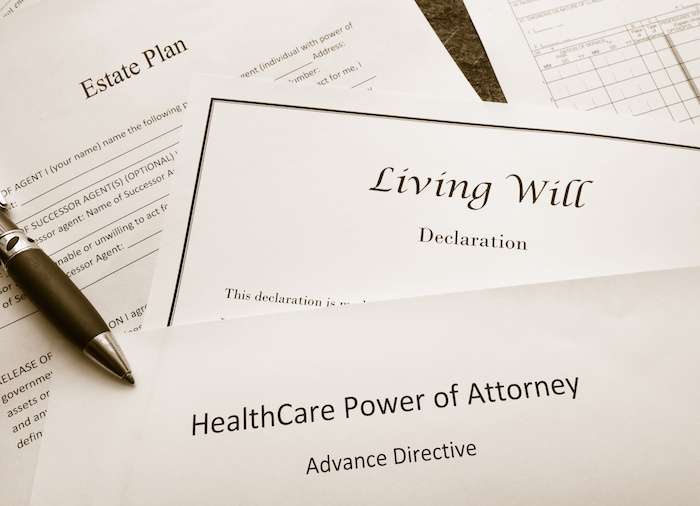
What Does a Living Will Cover?
A Living Will created through USLegalWills.com service enables you to create directions which handle the following matters:
| Treatment Area | What It Covers |
|---|---|
| Resuscitation | When your heart has stopped beating – includes CPR and electric shocks to stimulate the heart |
| Mechanical Ventilation | If you have stopped breathing but your heart is still beating – when and for how long you want ventilator support |
| Tube Feeding | Nourishment via stomach tube or intravenously – under which circumstances and for how long |
| Dialysis | Removal of waste and fluid management when kidney function is lost – circumstances and duration |
| Antibiotics/Antivirals | Level of medication you wish to receive – aggressive infection treatment vs. allowing a natural course |
| Comfort Care (Palliative) | Pain management, dying at home, and avoiding invasive treatment – the focus of most Living Wills |
| Organ & Tissue Donation | Wishes for transplantation – may include continuing life-sustaining treatment until organs can be removed |
| Body Donation | Donating your body to a medical institute or university for research |
What Is the Difference Between a Living Will and a DNR?
A Living Will is written by you as a proactive expression of your wishes for end-of-life care. A Do Not Resuscitate (DNR) order is fundamentally different – it is a medical order written and signed by a physician, often based on instructions included in your Living Will or Advance Directive.
A DNR directs medical staff to:
- Not start chest compressions or cardiac drugs when your heart has stopped beating
- Medical staff must not provide artificial ventilation to patients who have lost their ability to breathe independently.
Important: In the United States, a Living Will or Advance Directive alone is not sufficient to ensure you are treated under the DNR protocol.
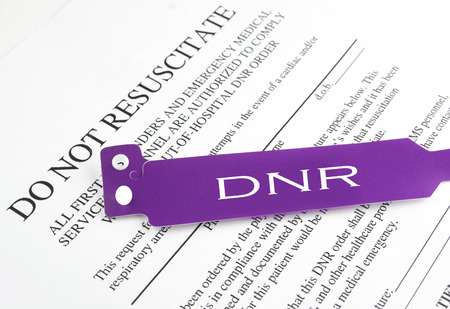
What Do DNR, DNAR, AND, POLST, and MOST Mean?
The medical field uses different terms to describe similar ideas which creates major confusion for people.
| Acronym | Full Name | What It Is |
|---|---|---|
| DNR | Do Not Resuscitate | The original term – a physician order to withhold resuscitation. Still the most commonly used term. |
| DNAR | Do Not Attempt Resuscitation | Adopted by the American Heart Association in 2005. More accurate because it acknowledges that resuscitation is not guaranteed even if attempted. |
| AND | Allow Natural Death | Newer term focusing on what will be done (allowing natural death) rather than what will not be done. |
| POLST | Physician Orders for Life-Sustaining Treatment | Includes DNAR information plus additional instructions on life-sustaining treatments. |
| MOST/POST | Medical/Physician Orders for Scope of Treatment | Similar to POLST – covers the scope of treatment desired by the patient. |
Medical specialists keep these documents separate but the general population recognizes them as identical tools which protect your final wishes from being violated.
What Is a Healthcare Power of Attorney?
A Healthcare Power of Attorney is typically used together with a Living Will.
Physicians need to rely on family members for medical decision-making because there is no Healthcare Power of Attorney in place but family members might not reach an agreement.
What Are Advance Directives?
At USLegalWills.com, we use the term “Advance Directives” to cover both a Living Will and a Healthcare Power of Attorney. It is a general term for expressing your directions for medical care ahead of time.
How Does a Financial Power of Attorney Differ from a Healthcare Power of Attorney?
A Healthcare Power of Attorney has no control over your business or financial affairs – the proxy can only speak on your behalf for medical decisions.
These two documents exist as separate entities which do not merge into one document.
How Does a Living Will Relate to a Last Will and Testament?
These two legal documents share the term “Will” but they function as separate entities with different purposes:
| Feature | Living Will | Last Will and Testament |
|---|---|---|
| When it applies | While you are alive but incapacitated | After your death |
| What it governs | Medical treatment decisions | Distribution of your estate |
| Key person named | Healthcare proxy (via PoA) | Executor |
| Cancelled when | Upon your death | Never (takes effect at death) |
Your Advance Directives (including the Living Will and Healthcare Power of Attorney) and your Financial Power of Attorney are all immediately cancelled upon your death. At that point, your Last Will and Testament comes into effect and the Executor named in your Will takes control of your affairs.
What Documents Make Up a Complete Estate Plan?
A complete estate plan includes four essential documents:
- Last Will and Testament – Governs the distribution of your estate after death
- Living Will – Specifies your medical treatment preferences if incapacitated
- Healthcare Power of Attorney – Names a proxy to make medical decisions on your behalf
- Financial Power of Attorney – Grants authority to manage your finances if you are unable to
All four documents are available through USLegalWills.com. Learn more about what goes into a complete estate plan.
Related Reading
- Power of Attorney: It’s Written, But Is That Enough?
- Every Document You Need for a Complete Estate Plan
- Estate Planning for New Parents
- Writing Your Will: The Definitive Guide

He has over 20 years of experience helping people to write their Will and other estate planning documents. He has been interviewed by many of the major news media outlets, and has contributed to articles in The New York Times, NY Metro Parents, U.S. News & World Report, and other leading publications. He has also contributed to a number of financial planning books.
Throughout his career, Tim has written extensively on the subject of Will writing and estate planning.
- Testamentary Trusts – what are they and how are they created? - April 2, 2026
- Every document you need for a complete estate plan. - March 26, 2026
- Estate Planning in troubled times - March 12, 2026