Originally published: May 9, 2024 | Last updated: April 2, 2026
TL;DR: A testamentary trust forms through your Will to start functioning after you pass away. The three main types of trusts consist of trusts which safeguard minor beneficiaries’ assets until they become adults and pet trusts which provide ongoing financial support for animal care and lifetime interest trusts which protect children’s inheritances within family structures that include multiple spouses. You can add all three to your Will at USLegalWills.com for $49.95 without any additional charges for complicated trust structures. The creation of testamentary trusts does not need legal assistance because living trusts need lawyers to establish them.

People understand the importance of having a Will but they receive advice to establish a Trust as well. The relationship between Wills and Trusts can be confusing because the word “Trust” describes several very different things.
What Is a Trust?
A trust functions as a legal system which enables someone to control assets that belong to another individual. Every trust involves three roles:
| Role | Also Known As | Function |
|---|---|---|
| Grantor | Donor, Settlor, Trustor, Trustmaker | The person who creates and funds the trust |
| Trustee | – | The person who manages the trust assets |
| Beneficiary | – | The person who receives the benefit |
The most typical testamentary trust works by having you (the grantor) name your 12-year-old child as your estate beneficiary in your Will but your Trustee manages the assets until your child becomes an adult.
What Is the Difference Between a Living Trust and a Testamentary Trust?
| Feature | Living Trust | Testamentary Trust |
|---|---|---|
| When created | While you are alive | Through your Will, after death |
| Type | Revocable or irrevocable | Described in Will instructions |
| Primary purpose | Avoid probate fees | Protect beneficiaries’ inheritance |
| Complexity | High – requires managing assets in/out | Low – included as part of your Will |
| Professional help needed | Usually requires an attorney | Can be done online |
A Living Trust serves as an estate planning tool which allows you to transfer assets beyond what your Will covers so that these assets can reach beneficiaries without needing probate court involvement. The process of establishing this trust becomes difficult because it needs legal help from a lawyer. Your Will contains instructions to establish a Testamentary Trust which your Executor must create after you die to benefit your designated beneficiary.
How Do I Create a Testamentary Trust?
The process of creating a testamentary trust exists as a simple task:
- Prepare a Will – either with an estate planning attorney or an online service like USLegalWills.com
- The Will service helps you through the process of choosing a Trustee while you establish your trust rules.
- After your death, your Executor works with a financial institution to set up the trust according to your Will’s instructions
- The Trustee will distribute funds to beneficiaries through your specified terms.
USLegalWills.com lets you create testamentary trust provisions during the Will writing process at no extra charge because the system automatically creates trusts for you.
What Types of Testamentary Trust Are Available at USLegalWills.com?
Trust for a Minor Beneficiary

The law forbids you from giving a minor child direct access to inheritance funds because you need to protect their financial security. The inheritance needs to exist as a trust which a Trustee must oversee to support the child’s development until they become an adult. A trust needs to exist for a young child even when there is no trust mentioned in your Will.
Your Will lets you maintain essential authority through the process of trust instruction addition.
- The trust allows people to stay protected past their 18th birthday because it continues to operate until their 35th year of life.
- The estate distribution occurs through multiple stages which begin with 25% distribution at age 21 and continue with 25% at age 25 and 50% at age 28.
- You need to establish separate financial responsibility thresholds for your children because they show different levels of responsibility.
- You should schedule the inheritance distribution for your children who have different ages to receive their inheritance simultaneously instead of waiting for the same age.
Pet Trust

US law treats pets as possessions because the law denies them the ability to receive inheritance directly. You need to specify a beneficiary who will receive your pet together with a set amount of money which depends on their ability to provide care. The price depends on the animal’s remaining years and present stage of life because caring for a dog at two years old requires different expenses than caring for a dog at fourteen years old. For readers who want more information about this subject we have written an article about pets in a Will.
Lifetime Interest Trust
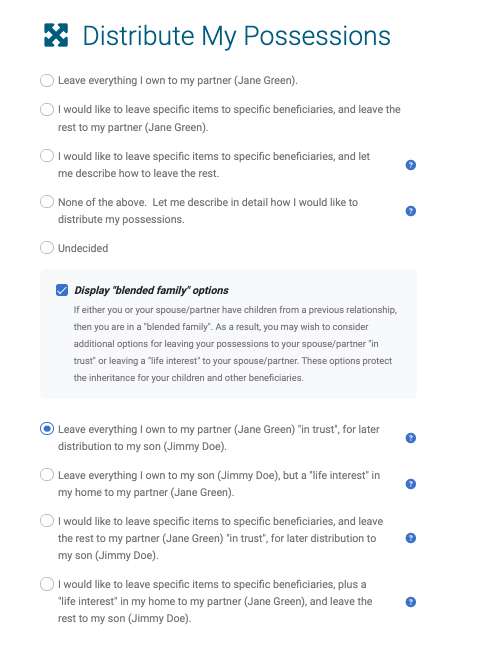
This trust serves as a crucial asset for families who have children from previous relationships because it allows one spouse to protect assets which belong to the other person’s children from a previous marriage. The problem it solves:
- You leave everything to your spouse in your Will
- Your spouse will survive for more than ten years after your death so they might start dating someone else.
- Your spouse has little involvement with your children (who may now be adults)
- Your spouse’s Will distributes all property after their death which includes your inheritance but your children will not receive any share of the estate.
Your spouse can access your assets throughout their life because a lifetime interest trust provides them with this right while the trust safeguards your children will inherit the remaining assets. At USLegalWills.com, you select “Display Blended Family Options” in the distribution section to set this up.
What Types of Trust Are Not Supported at USLegalWills.com?
Two well-known trust types require an estate planning attorney:
- The Spendthrift Trust operates to protect beneficiaries who lack the ability to manage their financial resources. The Trustee serves as the fund release controller who must grant permission before any money distribution can happen. The trust system protects inheritance from creditor claims because your nephew’s $100,000 debt will not allow creditors to get direct access to his spendthrift trust assets.
- Special Needs Trust (SNT) – for beneficiaries with special needs who receive government benefits (Medicaid, SSI). A large inheritance could disqualify them from these benefits. An SNT allows you to provide for them without the inheritance counting against their benefits.
Is It Difficult to Set Up a Testamentary Trust?
No. A testamentary trust is set up within your Will. The service USLegalWills.com lets you add trust instructions without needing to know about them. When you select Blended Family options or use the “Trusts for Minor Beneficiaries” section, your Will automatically includes all the instructions your Executor needs to create the trust at a financial institution.
How Much Does It Cost to Create a Testamentary Trust?
USLegalWills.com provides a Will service which costs $49.95 for Will preparation. The price remains at $49.95 for creating a Will which contains multiple trusts for minor beneficiaries together with a lifetime interest trust for your spouse. This includes one year of unlimited updates.
Prepare Your Will with Testamentary Trusts Now
Related Articles
- People who want to create a Will need to consider various things when they have children from different relationships.
- What steps should you take to guarantee your pets receive proper care after you pass away?
- New parents need to receive the best estate planning advice which will help them protect their family.
- Every Document You Need for a Complete Estate Plan
- Last Will and Testament – What It Is, When You Need It, How to Write It
- A Joint Will, Mutual Wills, Reciprocal Wills Explained

He has over 20 years of experience helping people to write their Will and other estate planning documents. He has been interviewed by many of the major news media outlets, and has contributed to articles in The New York Times, NY Metro Parents, U.S. News & World Report, and other leading publications. He has also contributed to a number of financial planning books.
Throughout his career, Tim has written extensively on the subject of Will writing and estate planning.
- Testamentary Trusts – what are they and how are they created? - April 2, 2026
- Every document you need for a complete estate plan. - March 26, 2026
- Estate Planning in troubled times - March 12, 2026